Minimizing Surprises: Why Pre-Deployment Testing is Non-Negotiable
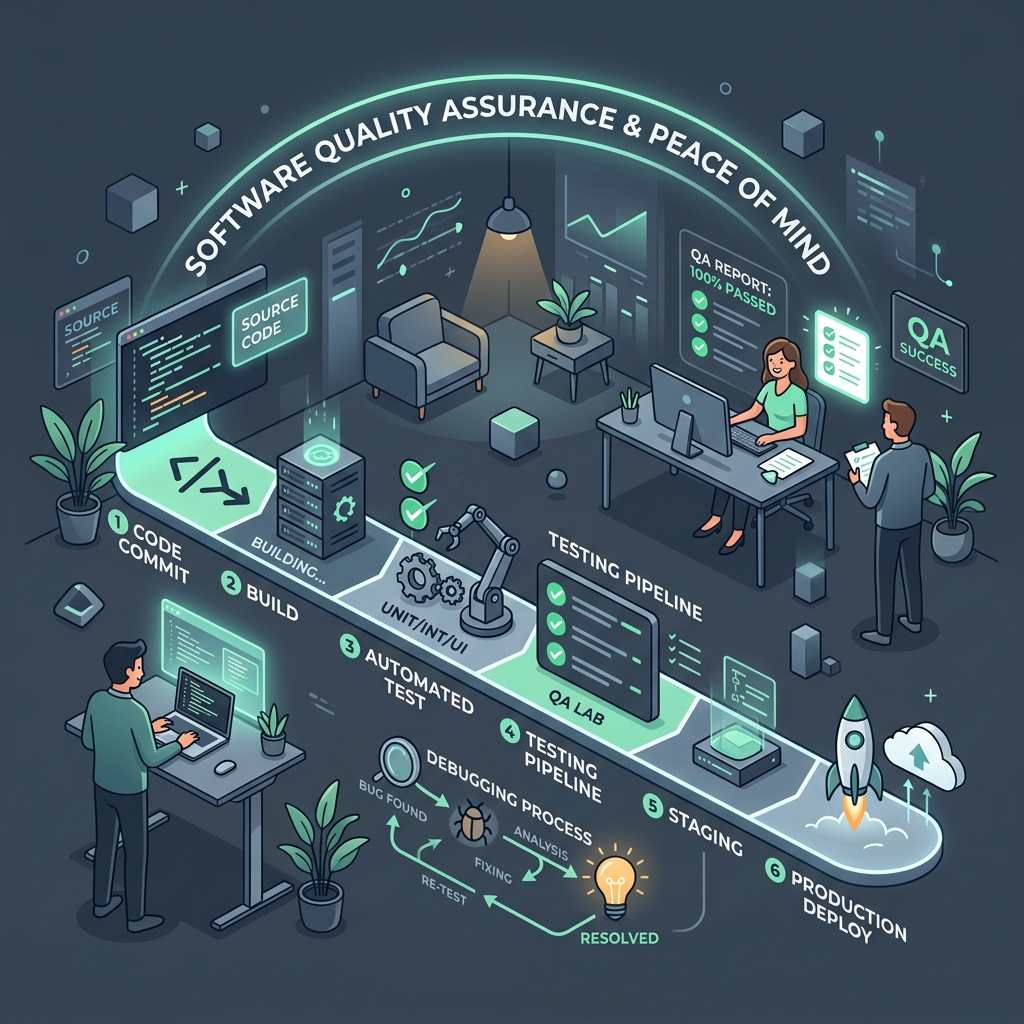
In the world of coding, things change fast. New tools and ways of building software pop up every day. But no matter how much things change, one rule always stays the same: if you don’t test your code before you share it with the world, it will test you when it breaks.
Every coder knows that terrible feeling. It’s that awful moment, usually at 2:00 AM on a Saturday, when you realize the app you just launched is failing in ways you didn’t even think were possible.
You find yourself falling into a deep pit of debugging. You are hunting down ghosts—trying to understand confusing error messages, guessing why things are broken, and knowing that real people are struggling to use your app. You are literally fighting a problem you can’t see and didn’t expect.
Testing isn’t just about following rules or ticking a box to say you did your job. It’s about making sure there are no nasty surprises waiting for you.
The True Cost of Skipping Tests
It’s easy to think testing takes too much time. When a deadline is close and the code seems to work perfectly on your own computer, launching it immediately feels like a win. But this is a trap.
- Small Problems Grow Bigger: Every piece of code you don’t test is a risk. When a bug slips through to the real world, the cost to fix it is much higher. You aren’t just fixing the code anymore; you’re apologizing to unhappy users and rushing to patch up the mess.
- Losing Trust: Your users don’t care how fast you built the app. They only care that it works. Every time the app crashes or acts weirdly, people lose a little bit of trust in it.
- Getting Burnt Out: Nothing drains a coder’s energy faster than constantly rushing to fix broken apps. If you are always running around putting out fires, you won’t have the time or energy to build cool, new features.
Find Problems Early
The goal of testing before you launch is to find out what is broken as early as possible. Different tests do different jobs:
- Check the small parts: Some tests make sure that individual blocks of your code work on their own.
- Check if everything fits together: Other tests make sure those different blocks can talk to each other without messing up.
- Check the real experience: The final tests act like a real user clicking around your app, to make sure it actually does what it’s supposed to do.
By spending time on this early, you map out the “what ifs.” You force yourself to ask, “what if the internet is slow?” or “what if a user types in the wrong password?” before it actually happens to someone.
The Best Reward: A Good Night’s Sleep
The most important thing for me isn’t how much code I can write in a day. It’s the ability to launch my work, close my laptop, and sleep soundly. That peace of mind doesn’t come from wishing nothing breaks. It comes from the proof that you tested your code, and you know it will behave exactly as you planned—even when things don’t go perfectly.
Test your code often. Minimize surprises. Guard your peace.